

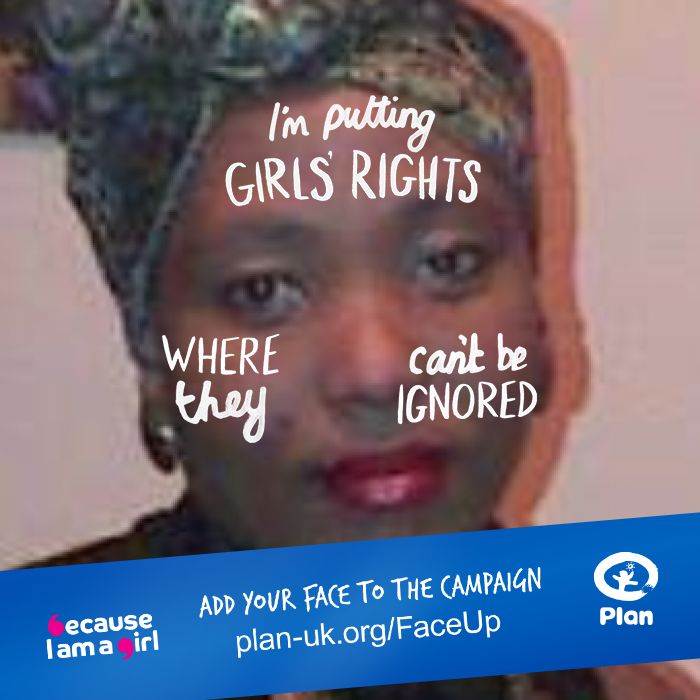
‘They took the razor out of the bag… I will never forget the pain I felt’, these were the emboldened words next to the face of a young African woman, with morose eyes that seemed to stare right back at me, while I sat on the London tube this past Friday.
It was the Plan’s, ‘Because I am a Girl’ campaign poster asking for a donation of £3 to help end female genital mutilation/circumcision (FGM/C) in Africa. The Plan is a global charity organisation that works ‘with children in the world’s poorest countries to help them build a better future’. As emotive as the poster was at eliciting donations, I couldn’t help wondering, ‘how could £3 change African cultural beliefs about women’s sexual and reproductive health rights (SRHR)?’.
FGM/C is the cultural practice of either partially or totally removing girls’ external genitalia. It is primarily practiced on young girls (under the age of 15) as part of an initiation rite into womanhood and marriage eligibility (UNICEF 2013). Therefore, their self-identity as women and social acceptance is intrinsically linked to the practice. FGM/C is concentrated on the strip of countries from the Atlantic Coast to the Horn of Africa. Last year the United Nations Children’s Fund (UNICEF) released a report into FGM/C across 29 countries in Africa. The study revealed that 125 million girls and women had undergone the practice (UNICEF 2013).
According to another recent study conducted by Institute of Development Studies for the UK Department for International Development (DFID), ‘dominant negative cultural framing of women’s issues’ is one of the major obstacles in operationalising SRHR in the sub-Saharan Africa region (Oronje et al. 2011: 1). This is because most African societies perceive women’s SRHR as ‘“unAfrican”, “modern” or as alien to Africans’ way of life’ (Oronje et al. 2011: 8).
With that said, it is promising to note that the Protocol to the African Charter on Human and Peoples’ Rights on the Rights of Women in Africa[1] is the first international human rights instrument to explicitly call for the:
‘prohibition, through legislative measures backed by sanctions, of all forms of female genital mutilation, scarification, medicalisation and para-medicalisation of female genital mutilation and all other practices in order to eradicate them’ (Article 5 (b)).
Consequently, the Protocol has encouraged African States, namely ‘Burkina Faso, Egypt, Ghana, Kenya, Sudan and Tanzania’, to domesticate laws which criminalise this harmful cultural practice (Ebeku 2006: 28). With that said, a piece of legislation is not nearly enough to transform cultural attitudes. With that said, even using the term ‘genital mutilation’ instead of ‘genital mutilation’ highlights the disjuncture between the global human rights discourse, and cultural interpretations of justice (2006). The World Health Organisation considers the practice as a form of ‘mutilation’, while those who practice it as a cultural practice prefer to refer to it as ‘circumcision’.
Ugandan feminist, Sylvia Tamale argues that in order to avoid cultural backlashes ‘African feminists [need to] work within the specificities of culture’ to discard its oppressive aspects, while embracing its emancipatory ones (2008: 54). Therefore, ‘African culture’[2] can also be tailored to protect women’s rights. The Graça Machel Trust is an example of a women’s organisation in Africa that has put this into practice when addressing child marriage and FGM/C in East Africa[3].
The Women’s Right Program Manager of the Graça Machel Trust, Edith Makandi Wanjohi[4], described how the Trust has strategically gone about convincing traditional leaders and practitioners of FGM/C of the health complications that come with female circumcision. Recognising the cultural significance of initiating girls into womanhood, the Trust does not propose that the ritual be abolished altogether, but encourages traditional leaders to exclude the actual cutting of the clitoris, while preserving the rest of the transitioning ritual. This way, the young woman is still able to enjoy the social status (and security) that comes with the ritual.
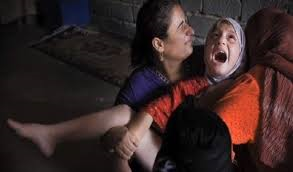
So when I got back to Brighton – curious to find out how the Plan executed their FGM/C elimination projects – I started researching about the ‘Because I am a Girl’ campaign. I came across this video on the progress they have made in combating FGM/C in Mali, where 85% of the girls are reported to have undergone the practice:
In 2007, when the Plan started the project to end FGM/C in Mali, 70% of the 140 villages they approached ‘said they were either totally or partially against abandoning the practice’. But, by 2009 that figure had halved, with about 25 communities officially declaring their commitment to eradicating FGM/C. Strategies employed in this project have included holding open forums in village communities with girls who have survived FGM/C, traditional leaders, religious leaders, and practitioners of FGM/C. ‘We travelled from village to village to excise girls. Now we have decided to stop because a lot of girls had died from excision’, a traditional cutter says in the video.
So even though traditional patriarchs are often targeted in culturally related interventions, it is actually the women who are the custodians of ‘African culture’ (Tamale 2008: 58). In this case, the Plan is strategic in including in these village dialogues the women who do the actual cutting. As a result, they have a higher likelihood of influencing traditional leaders, and succeeding in their SRHR interventions.
If you would like to show your support for this project add your face to the ‘Because I am a Girl’ campaign, as I have.
Bibliography
Ebeku, Kaniye.‘Considering the Protocol on the Rights of Women in Africa’, Africa Insight, Africa Institute of South Africa (AISA) 1, 1 (2006).
Oronje, R. N., Crichton, J., Theobald, S., Lithur, N. O. and Ibisomi, L. (2011) ‘Operationalising sexual and reproductive health and rights in sub-Saharan Africa: constraints, dilemmas and strategies’, BMC International Health and Human Rights 2011, 11 (Suppl 3) (S). Available: http://www.biomedcentral.com/1472-698X/11/S3/S8. Accessed: 26 October 2014.
Merry, S. E. (2006) ‘Disjunctures between global law and local justice’, in Merry, S. E. (ed.)Human rights and gender violence: translating international law into local justice. Chicago: Chicago University Press.
Protocol to the African Charter on Human and Peoples’ Rights on the Rights of Women in Africa, adopted 11 July 2003, entered into force 25 November 2005. Available: http://www.achpr.org/files/instruments/women-protocol/achpr_instr_proto_women_eng.pdf. Accessed 26 October 2014.
Tamale, Sylvia, ‘The right to culture and the culture of rights: a critical perspective on women’s sexual rights in Africa’, Feminist Legal Studies 16, 1, (2008), pp.47-69.
United Nations Children’s Fund (UNICEF), ‘Female Genital Mutilation/Cutting: A statistical overview and exploration of the dynamics of change’ (2013). Available: http://www.unicef.org/publications/index_69875.html. Accessed 27 October 2014.
Footnotes
[1] Adopted at the 2nd Ordinary Session of the Assembly of the African Union (AU) on the 11th of July 2003, in Maputo (Mozambique). Entered into force two years later on the 25th of November 2005.
[2] Please note that I do not use the term ‘African culture’ with the blanket assumption that all cultures in the African continent are homogenous, but rather to ‘highlight those aspects of cultural ideology that are widely shared among Africans’, such as the ethos of ubuntu , and the legacies of imperialism and colonialism (Tamale 2008: 49).
[3] On June 2013 the Graça Machel Trust co-funded the East Africa Regional Conference on Child Marriage, in Dar Es Salaam (Tanzania). Available: http://gracamacheltrust.org/dev/?q=node/97. Accessed 26 October 2014.
[4] Wanjohi was speaking at the Canon Collins Scholars’ Conference, in Sandton (July 2014).


Star
This is another nicely written piece Ntokozo. It flows well, engages the reader and your own voice is clear, connecting your own daily observations and reflections with a range of materials including the Plan video and your campaign photo. Keep this up!
Star
Your use of Tamale’s work is potentially very interesting – including her argument that women are the custodians of African culture. There is so much debate here. I encourage you to delve further into this academic debate in this piece (See below)
Wish
Try to engage more with some of the academic literature about culture and rights, both in general and the specific literature on FGM. What are the arguments around the preservation of ‘traditional’ culture vs the pursuit of ‘modern’ human rights? Why does the very language used (FGM or FGC?) cause controversy? A few initial suggestions for you in terms of reading:
– Cowan, J Dembour M.B and Wilson, R. eds (2001) Culture and Rights
– Merry S.E. (2006) ’Transnational Human Rights and Local Activism: mapping the Middle’ American Anthropologist 108(1)
– Bell, K. (2005) ‘Genital cutting and Western discourses on sexuality’ in Medical Anthropology 19(2)
– Kalev, H.D. (2004) “Cultural rights or women rights? The case of female genital multilation” in Sex Roles 51 (5/6)
– Abusharaf, R.M. (2006) Female Circumcision (read the introduction)
– Gruebnaum, E. (2001) The Female Circumcision Controversy: An anthropological Perspective
– Shell-Duncan B and Hernlund, Y. ed (2001) Female “Circumcision” in Africa: Culture Controversy and Change (e.g. read first chapter)
Tips and clarifications
– In para 1, I am not sure about the world bolded, do you mean ‘emboldened’?
– In para 4, the study seems to be by IDS and others not DFID? Was it for DFID?